GPTfy Cockpit Overview
GPTfy Cockpit is your central control panel for managing AI features within Salesforce. It provides access to key components, configuration options, and dashboards that help you deploy and monitor GPTfy effectively across your org.
Note: After installing GPTfy, a banner appears on the Cockpit prompting initial setup. Click the link to launch the Setup Wizard.
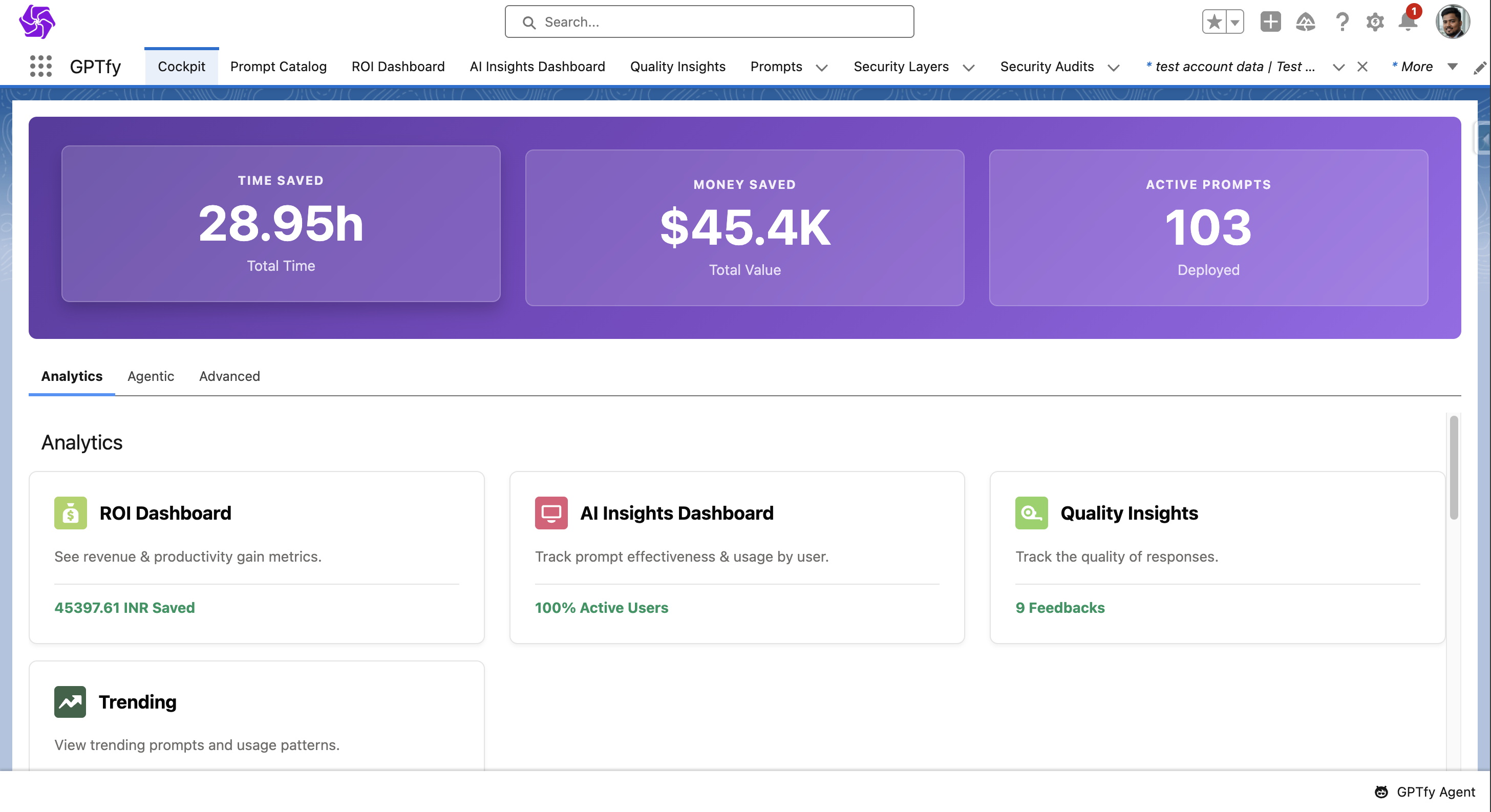
Cockpit Tiles Overview
What You See First (Key Metrics):
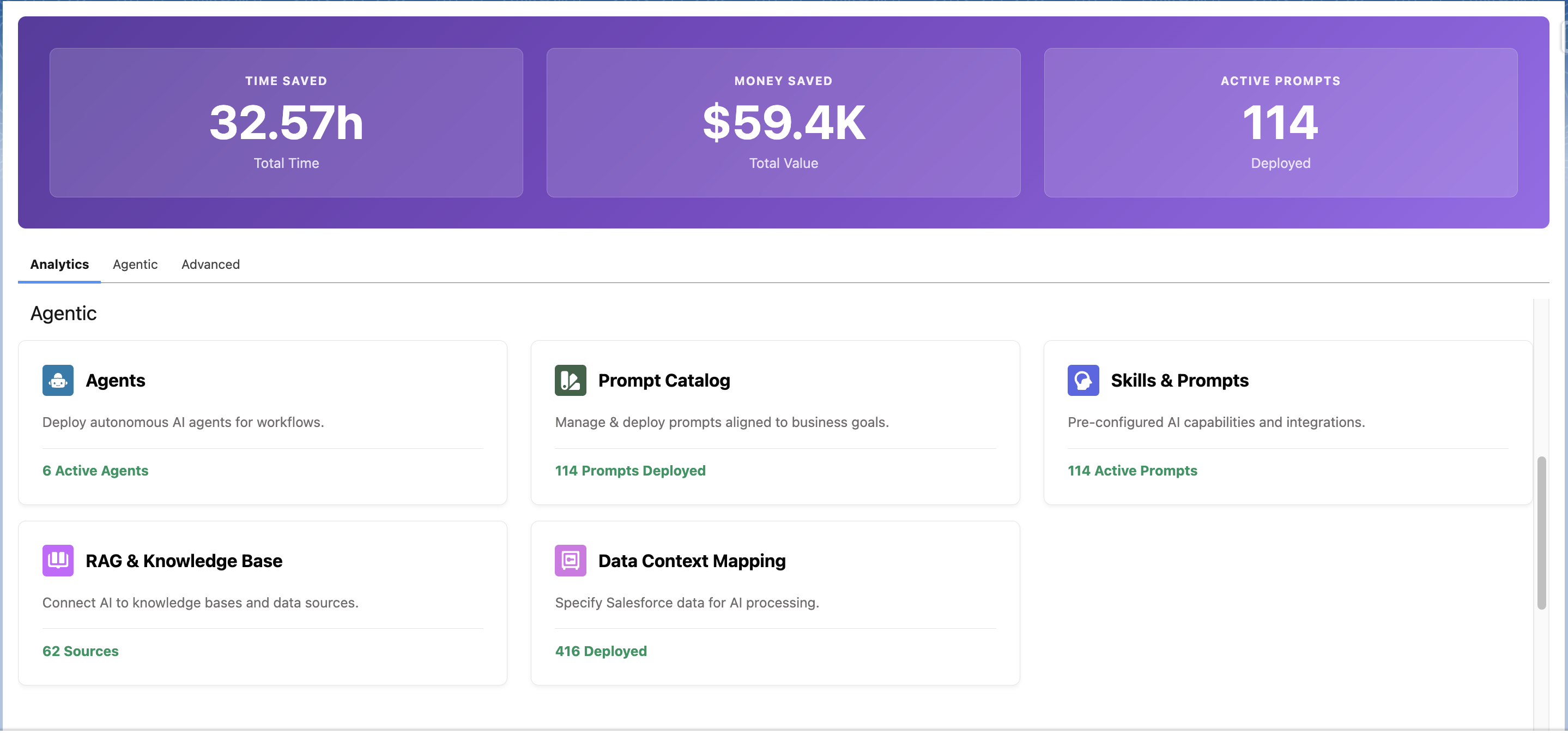
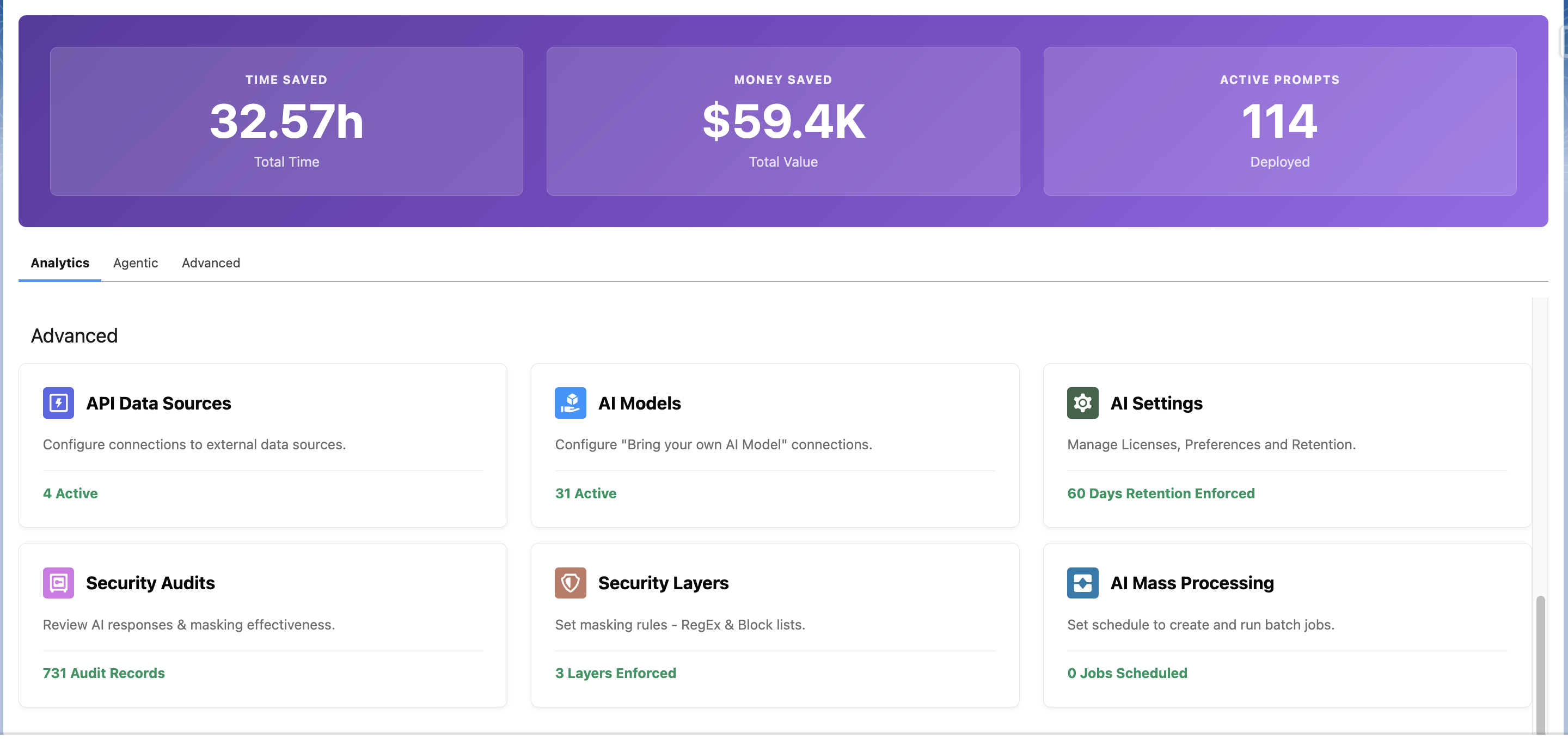
At the top of the Cockpit, the KPI Banner provides real-time ROI snapshots:
- Time Saved: Total hours saved by AI automation across your org.
- Money Saved: The calculated monetary value of that saved time.
- Active Prompts: A live count of currently deployed AI capabilities.
How It Is Organized:
To keep navigation intuitive, the Cockpit segments all features into three logical workflows (Tabs):
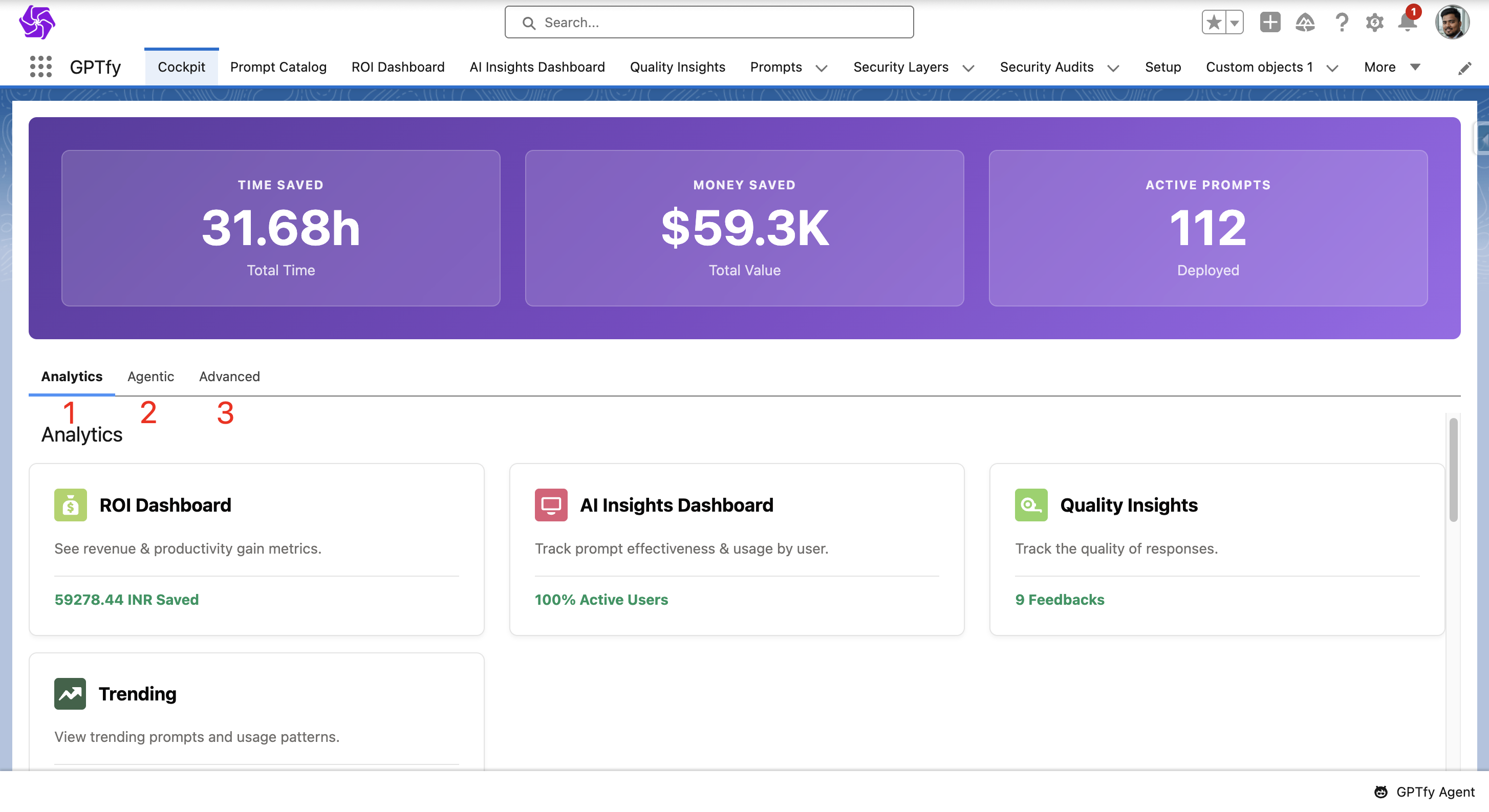
- Analytics: For measuring impact and adoption.
- Agentic: For building and deploying AI behaviors.
- Advanced: For technical configuration and security governance.
Each tile in the Cockpit leads to a configuration screen.
Note: Some features are only available in Pro or Enterprise plans.
Analytics
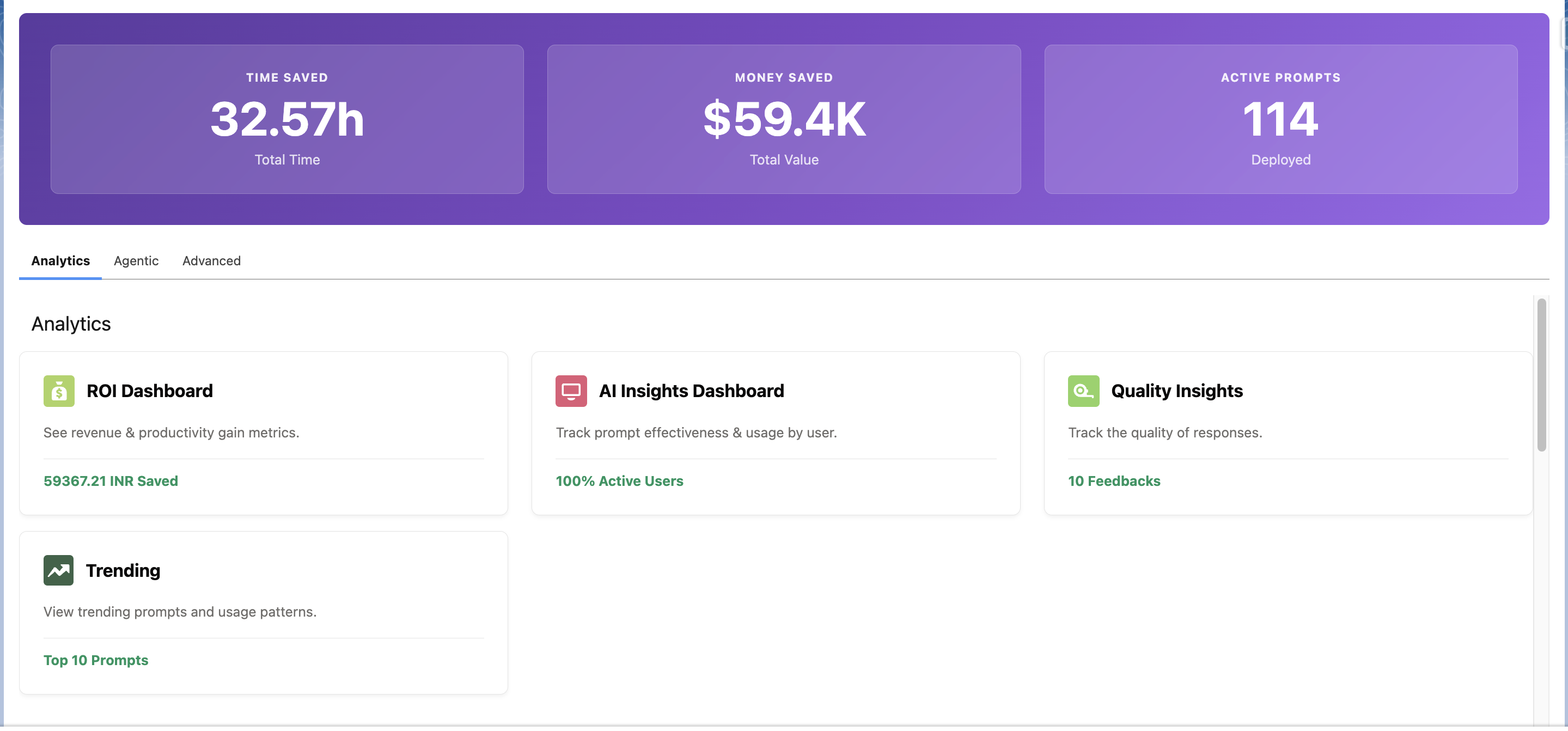
Monitor the pulse of your AI adoption. This workspace provides comprehensive dashboards to track ROI, user engagement, prompt quality, and emerging usage trends to ensure you are maximizing business value.
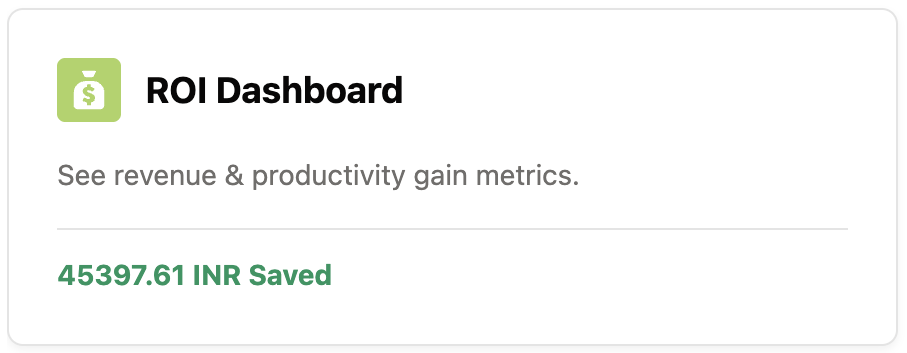
ROI Dashboard
See how much money GPTfy is saving across roles, objects, and departments. This dashboard calculates monetary savings by measuring reduced manual effort and multiplying it with your hourly cost.
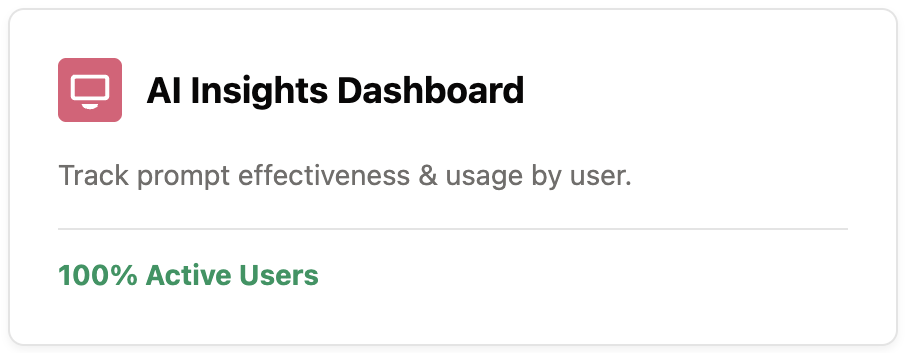
AI Insights Dashboard
Track how much time your users save by using GPTfy. Visualize usage by object, user, or profile, and identify where AI is having the biggest impact on efficiency.
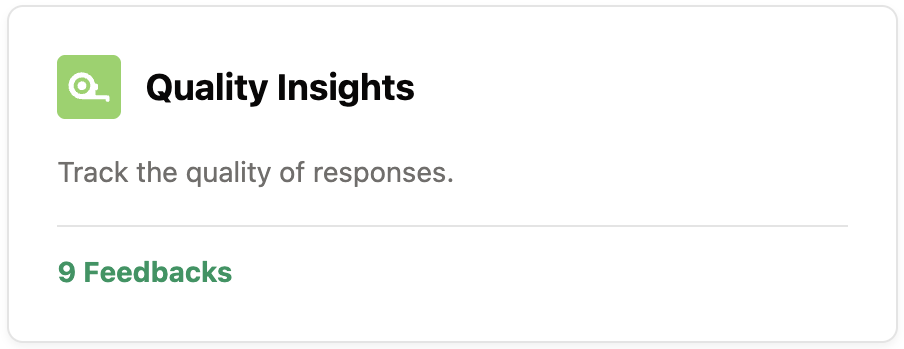
Quality Insights
Understand which prompts are performing well by collecting user feedback. Analyze aggregated ratings and comments to identify areas for improvement and fine-tune responses.
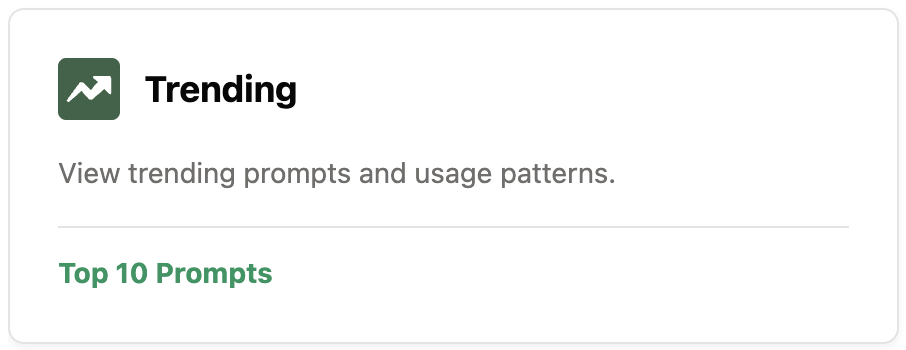
Trending
Trending analyzes records over time to surface trending objects, prompts, and behaviors, helping you quickly understand what is gaining attention or shifting across objects.
Agentic
The command center for building intelligent behavior. Configure how your AI thinks, acts, and remembers by managing Agents, Skills, Prompts, and the data that grounds them.
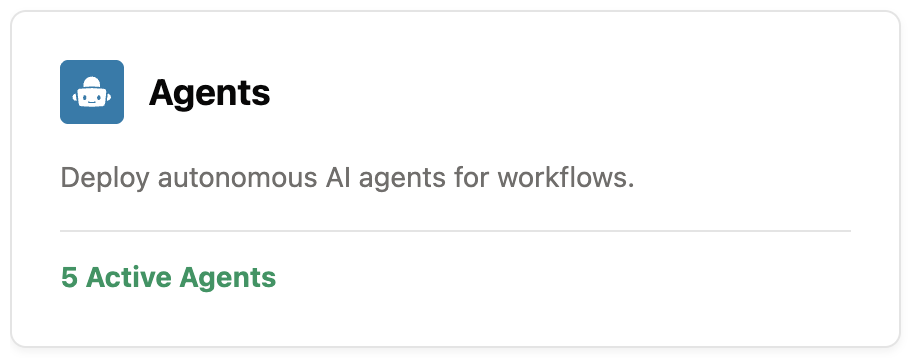
Agents
Build, configure, and test intelligent Salesforce-native agents. Agents combine system prompts, AI models, RAG sync, and agentic prompts to operate as AI assistants within Salesforce or via REST APIs.
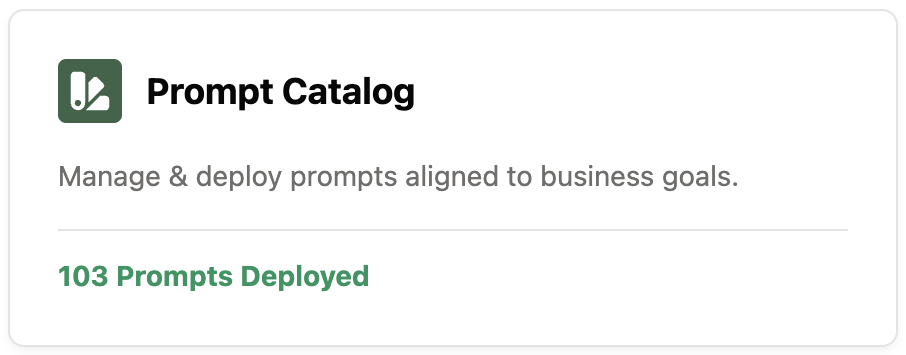
Prompt Catalog
Organize and manage your prompts by department or business goal. Centralize prompt access, control visibility by profile or use case, and track usage across teams. Create new catalogs or use prebuilt ones to streamline prompt reuse.
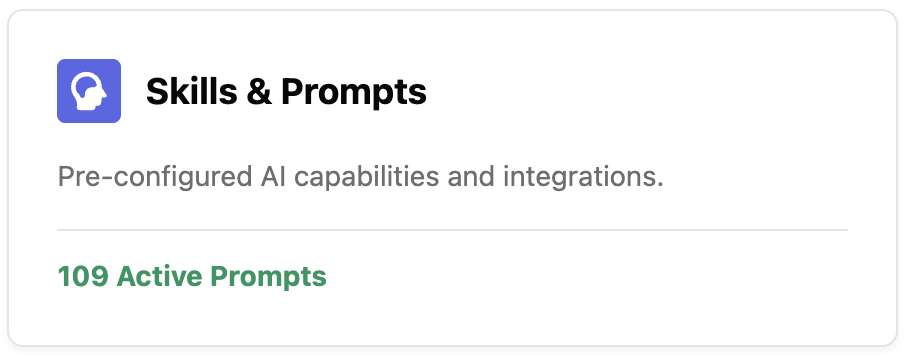
Skill & Prompts
Define how your AI thinks (Prompts) and acts (Skills). These to move beyond simple chat and execute real-time Salesforce business operations directly within your workflow.
RAG & Knowledge Base
The RAG & Knowledge Base workspace serves as your AI’s memory. By indexing Salesforce Knowledge and custom objects, it ensures every response is grounded in your company’s verified data for maximum accuracy and trust.
Data Context Mapping
Define which Salesforce data across up to three object levels is sent to AI. Control field selection, add filters, and apply masking to protect sensitive information before sharing.
Advanced
Deep system configuration and governance. Manage the underlying infrastructure, including external API connections, model providers (BYOM), security compliance layers, and batch processing.
API Data Sources
Enrich prompts with external data pulled in real time. Supports JSON injection, field overflow handling, and multi-source integration to make responses more accurate and insightful.
AI Models
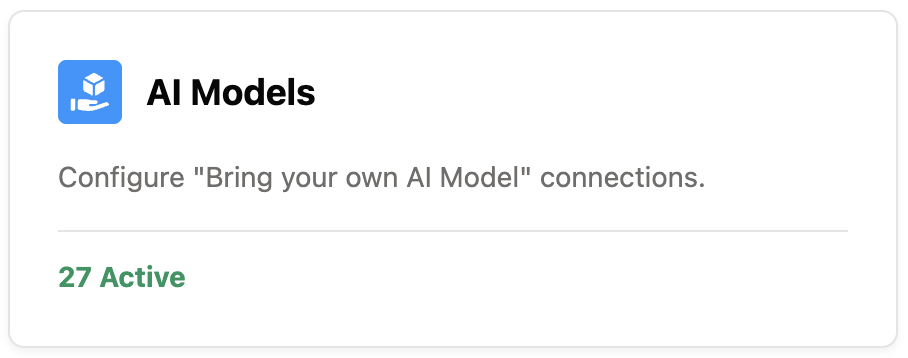
Configure your AI model connections, including OpenAI, Google Vertex AI, Claude, Deepseek, etc. Set parameters like temperature and token limits, or use prebuilt GPTfy models out of the box.
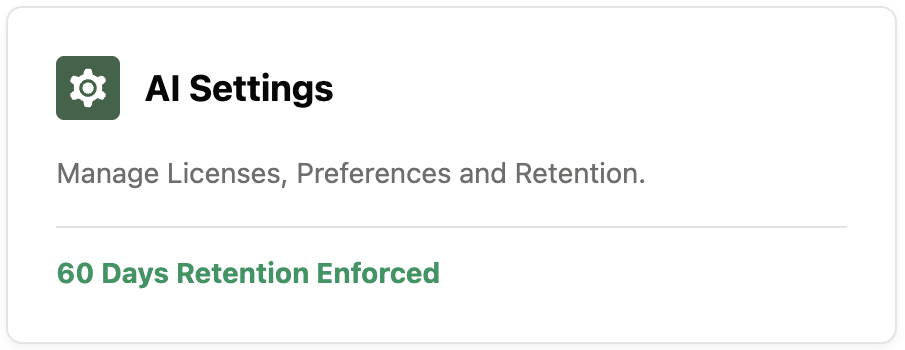
AI Settings
Under AI Settings, we have four tabs:
-
Licenses: Control access and features based on your subscription tier (Starter, Pro, Enterprise). Each tier has different capabilities.
-
Data Retention: Manage AI security audit logs. Set automatic deletion schedules to optimize storage and performance.
-
Preferences: Customize your GPTfy experience. Options include:
- Adding Prefix/Suffix
- Typewriter Effect
- Exception Log
- Prompt Versioning
- File Processing
- Max File Size
- File Type
- Max File Count
- Reporting Period (in Months)
- Hourly Cost
- Allow User Input Prefix
- Enable Data Cloud
- Salesforce Domain URL
- Salesforce Client Id
- Salesforce Admin User Name
- Salesforce Private Key File Id
- Salesforce Auth Named Credential
- Data Cloud Named Credential
-
Voice Configuration: Configure how GPTfy handles voice recordings. Define models, recording limits, and prompts that will process voice notes and return transcriptions using AI.
Security Audit
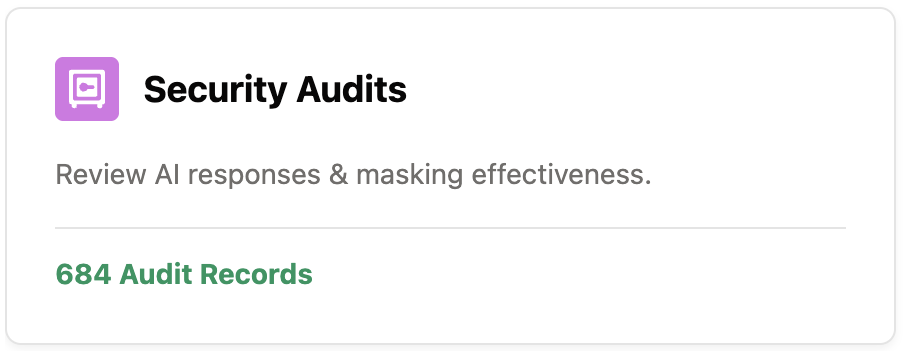
View detailed logs of every AI call made. Track inputs, responses, token usage, and any masked PII. Use this data for debugging, compliance, and audit verification.
Security Layers
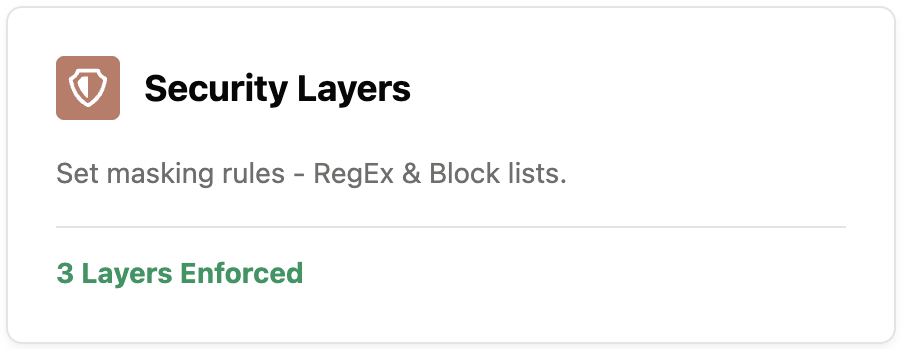
Mask sensitive data before it reaches any AI model using field-level, regex, or blocklist rules. Apply layered masking strategies to meet compliance requirements.
AI Mass Processing
Automate prompts at scale with scheduled runs across thousands of records. Use filters, retry logic, and COFi (child-level) conditions to target the right data with precision.